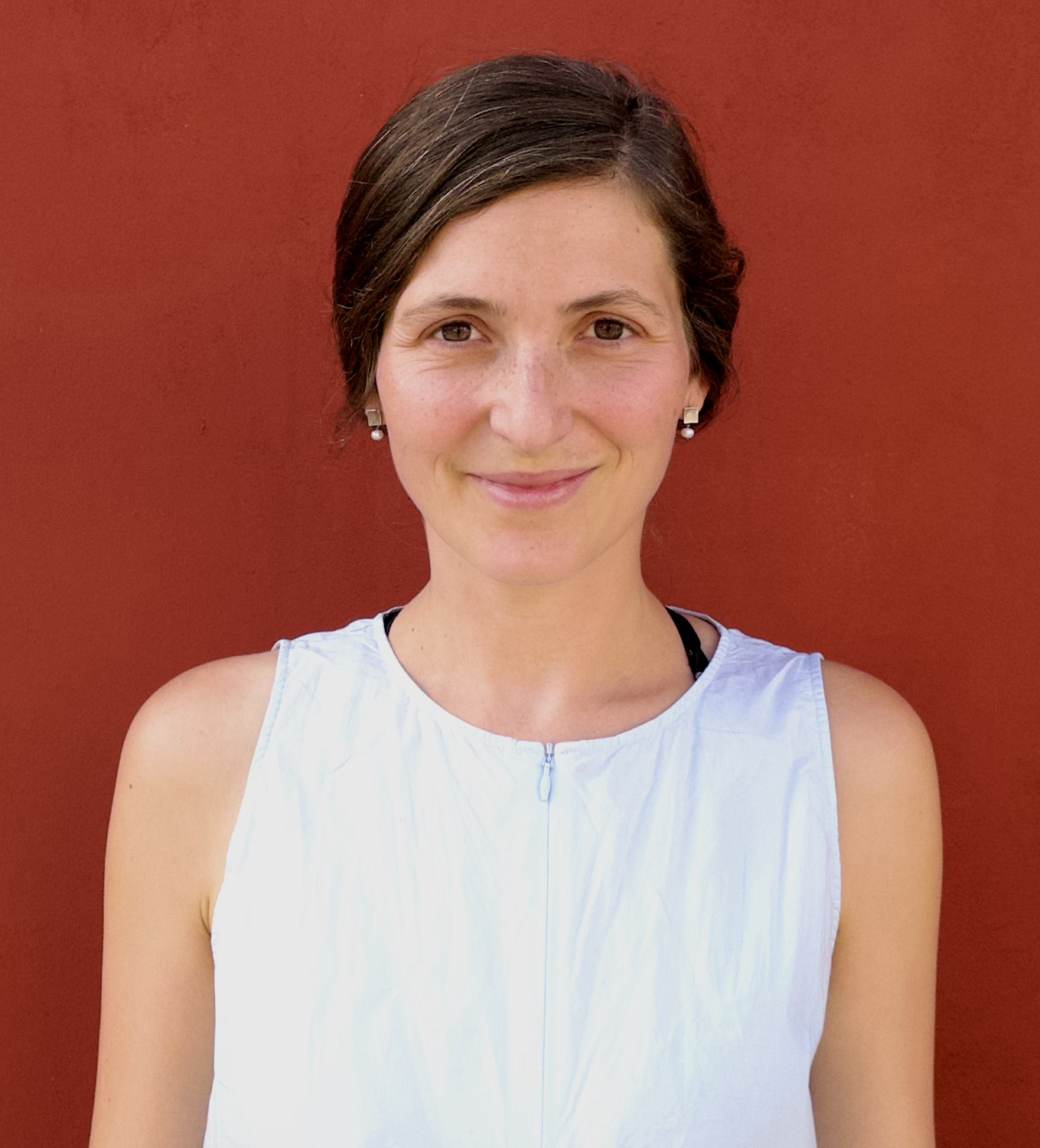
About Me

I am a sign language linguist working primarily on Kata Kolok, a sign language that emerged spontaneously in a village community in Bali. In my research, I am interested in the intersection of language acquisition, sociolinguistics and language and interaction with a focus on signed languages. I am curious about how languages emerge and adapt within their ecological niches and how language is shaped by and for social interaction.

I am temporarily filling the position of Professor for Sign Languages at Humboldt-University Berlin. In 2026, I am also a selected fellow in the 10th cohort of the Leadership Academy at GSO (Guidance, Skills, and Opportunities for Researchers). Before moving to Berlin, I was a Marie Skłodowska Curie Postdoctoral Research Fellow with my project Language Ecology and Modality in Turn-Taking Acquisition (LETITIA) at Stockholm University. I also have been a postdoc in the ERC-funded SignMorph Project at University of Birmingham, headed by Adam Schembri and in the ERC-funded Emergence of Language in Social Interaction (ELISA) Project at Tilburg University, headed by Connie de Vos.

I obtained my Bachelor degree in "Sign Languages" from Hamburg University in 2014, my research Master degree in "Linguistics", specialised in Sign Language Linguistics, from University of Amsterdam in 2017, and my PhD from Radboud University Nijmegen in March 2022.

I am also a yoga teacher! Find some more information in the section Yoga!
Research

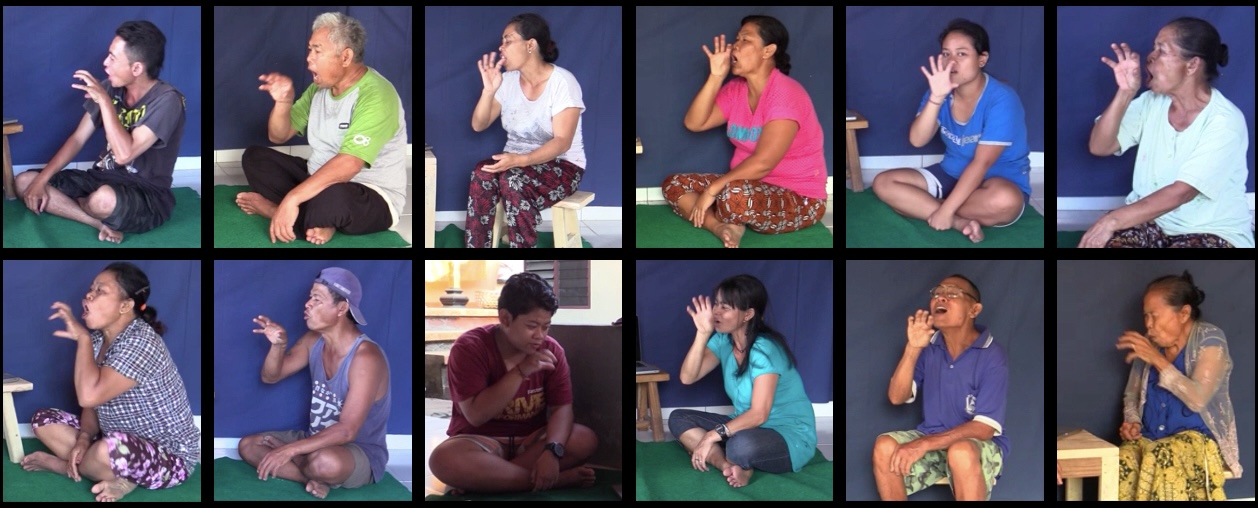
Most of my research focuses on Kata Kolok, a sign language used in a rural enclave in Bali, Indonesia. My work so far has been a combination of language documentation, sociolinguistic variation on several levels of linguistic description and research into language acquisition and language and interaction. I have also worked on conversational data, applying methods from Conversation Analysis.

Pragmatics

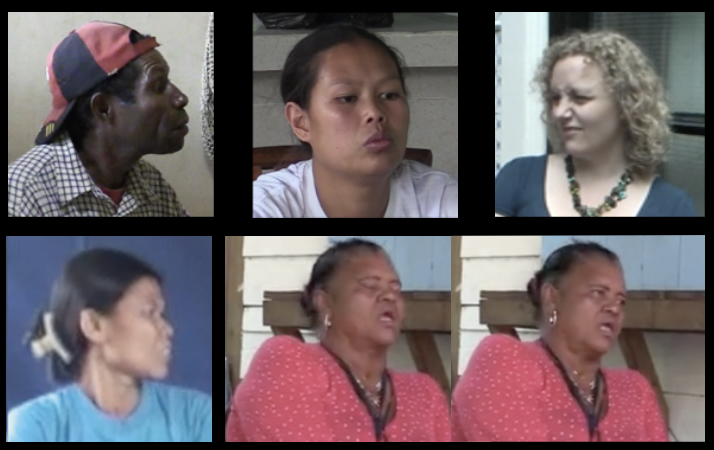
I have worked on repair and continuers (a type of feedback) in BSL signers and English speakers with Lierin de Wael , Rehana Omardeen and Mark Dingemanse . We find that signers and speakers use lots and lots of non-manual elements to indicate understanding or misunderstanding in conversation - and that these elements largely align in terms of form across English and BSL!
Within my Marie Curie LETITIA project, I started working on the acquisition of turn-taking in Kata Kolok. I am looking at question-answer sequences and investigate structure (and hopefully timing) in adult Kata Kolok signers and deaf child signers using data from the Kata Kolok Child Signing Corpus! I am particularly interested in conversational settings - who signs to whom and how many people are present?

Ongoing variation work:
1) I am still working on turn-taking in adults and kids, focusing on the type of questions and development.
2) With Lauren Reed and Josefina Safar , I am exploring response tokens ( a type of feedback) in five different signing communities!


Variation

I have explored variation in the form of signs and in the lexicon. In co-authored work with Katie Mudd , we have found that whether Kata Kolok signers are hearing or deaf influences their choice of signs in a picture elicitation task. We used a lexical distance measure to analyse people's responses. Building up on this work, we have made a cross-linguistic comparison, comparing our data from Kata Kolok and data from British Sign Language and Israeli Sign Language. We show that the language-level variation in all three languages is similar but highest in BSL but that BSL variation shows the higest level of grouping. This is particularly exciting because the literature suggests that smaller sign languages, like Kata Kolok, show more lexical variation than bigger sign languages. We also looked into lexical variation among Balinese Homesigners within the ELISA project, and found that social interaction correlates with lexical variation!

Ongoing variation work:
1) I am working with Nick Palfreyman and the Indonesian team from his ELDP project on comparing the same lexical picture stimuli we used in Kata Kolok and Balinese Homesigners to deaf signers from other places across Indonesia!


Acquisition of Kata Kolok

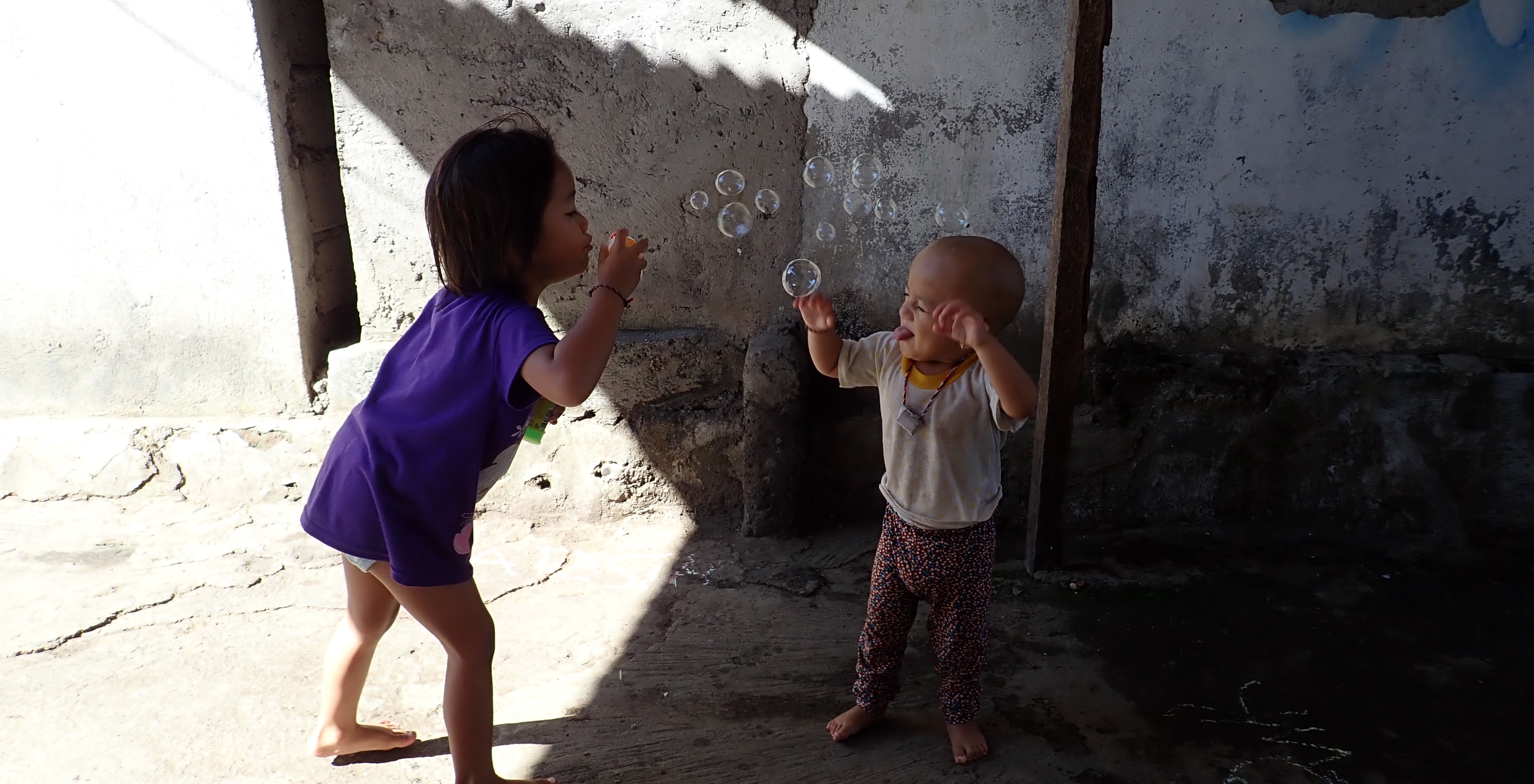
Some of my favourite projects are focused on how deaf children acquire Kata Kolok - I have used observational and experimental data. In a study based on naturalistic data, I have analysed many hours of longitudinal recordings of four deaf children for child modifications of signs, i.e. signs that deviate from the adult target. The focus children grow up with many of their immediate family members being deaf, but also many hearing relatives who can sign. I analysed these signs using a feature-coding used for adult signers as well. I found that the data includes most modifications in handshape but that location features are often changed as well. I have also designed and conducted a low-tech version of an familiarisation paradigm with signing and non-signing children in the community. In this study, I have animated a monkey to sign Kata Kolok sign and we recorded signing children (hearing and deaf) and non-signing children while watching the monkey sign correct Kata Kolok signs or mispronounced Kata Kolok signs. I found that the traditional analyses do not reveal any group differences but additional behavioural analyses may point to differences between groups. This project is crucial to kickstarting experimental acquisition work in the field - an endeavour that is not often done due to the many challenges met.

Ongoing acquisition work:
1) Turn-taking!
2) I have been doing some pilot coding on child-directed signing and input in Kata Kolok. Very slow but very exciting!


Morphological complexity

We are discussing the parallels and flawed comparisons between sign languages and creoles in an exciting paper with Felicia Bisnath , Marah Jaraisy , Rehana Omardeen and Adam Schembri

Iconicity

Can non-signers understand the iconicity in BSL morphology? We are investigating this question with a series of experiments within the SignMorph team .

Negation in Kata Kolok

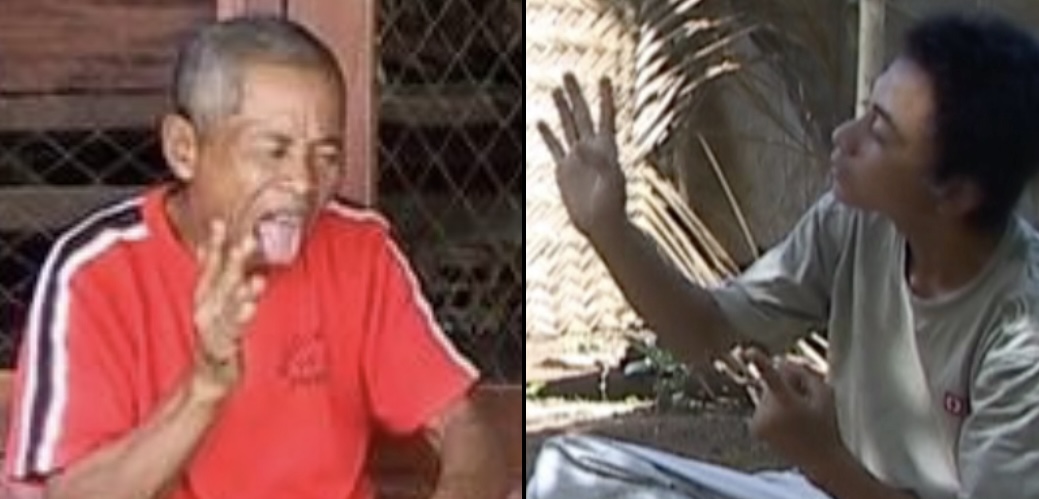
For my MA thesis, I studied how negation is expressed in Kata Kolok, using spontaneous data from the Kata Kolok Corpus. I investigated spontaneous dyadic conversations of six deaf Kata Kolok signers from three subsequent generations as to the form of the negator they use and the position of the negator. My data suggests that, against what has been previously reported, Kata Kolok signers use a manual sign and a negative side-to-side headshake to negate propositions. Both markers probably have a origin in co-speech gesture. Non-existentials are marked with tongue protrusion, which is not found in co-speech gesture, but maybe there is a link to the daemon Rangda from Balinese mythology.

In collaboration with my PhD candidate Satyawati we looked into conversational data from seven Balinese homesigners to explore their negation pattern and both a lot of similarities in the manual markers used across all homesigners as well as great variation among them. We also find some patterns that suggest language contact with Kata Kolok!

I am also involved in a big comparative study of negative headshake led by Vadim Kimmelman in which we analysed the amplitude of headshakes in a large number of differnt sign languages using computer vision.

Name signs in Kata Kolok and Sign Language of the Netherlands

In this project, I looked at the form of name signs, i.e. signs attributed to people, in Kata Kolok and Sign Language of the Netherlands.

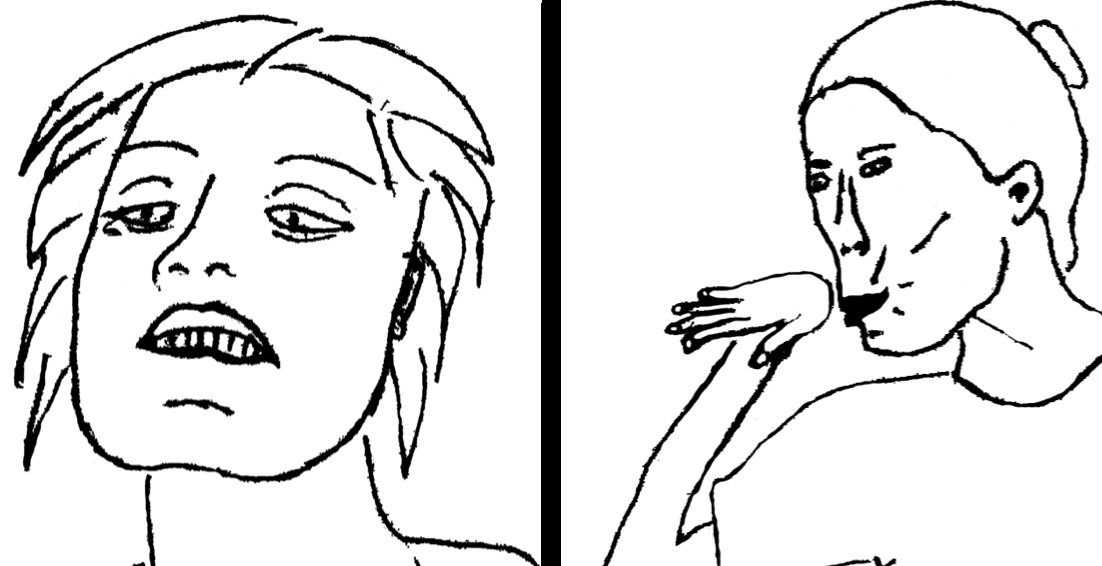
Name signs in Kata Kolok are descriptive. In NGT, they may incorporate fingerspelling. In both languages, name signs tend to be one-handed and located around the head. Only KK name signs comprise many basic handshapes and often make contact with the body. Very different is what the mouth does: in NGT, signers always imitate the spoken name; in Kata Kolok, signers never imitate the name but often use nonmanuals. My favourite finding is that Kata Kolok has nonmanual name signs!


In, 2025 I was interviewed by writer Deidre Mask about this work for her new book project!

Output

PhD Dissertation

Lutzenberger, H. (2022). Kata Kolok phonology - Variation & acquisition. [PhD Thesis, Radboud University]. [PDF] .

Peer-reviewed Articles

Lutzenberger, H., Mudd, K., Satyawati, & de Vos, C. (in press). Social networks predict lexical variation in Kata Kolok signers but not in Balinese homesigners. Language in Society.

Satyawati, Palfreyman, N., & Lutzenberger, H. (2026). Negation in Balinese homesigning varieties. Sign Language & Linguistics, 1-49. https://doi.org/10.1075/sll.25013.sat

Shrestha, A., Lutzenberger, H., & Schembri, A. (2026). The effect of linguistic and social factors on handshape choice in classifier verbs in Nepali Sign Language (NSL). Open Linguistics, 12(1), 20250087. https://doi.org/10.1515/opli-2025-0087

Bisnath, F., Lutzenberger, H., Jaraisy, M., Omardeen, R., & Schembri, A. (2025). Deconstructing notions of morphological “complexity”: lessons from creoles and sign languages. Journal of Linguistics, 1–31. https://doi.org/10.1017/S0022226725000180

Satyawati, Ni Made Dadi Astini, Ni Made Sumarni, Ketut Kanta, Safar, J., Lutzenberger, H., Palfreyman, N., & de Vos, C. (2025). The Balinese Homesign Corpus: New insights into corpus development in a rural signing context. Language Documentation & Conservation 19:305-327.2

Lutzenberger, H., Casillas, M., Fikkert, P., Crasborn, O., & de Vos, C. (2024). More than looks: exploring methods to test phonological discrimination in the sign language Kata Kolok. Language Learning & Development, 20(4), 297-323. https://doi.org/10.1080/15475441.2023.2277472

Lutzenberger, H., de Wael, L., Omardeen, R., & Dingemanse, M. (2024). Interactional infrastructure across modalities: a comparison of repair initiators and continuers in British Sign Language and British English. Sign Language Studies 24(3), 548-581. https://dx.doi.org/10.1353/sls.2024.a928056

Lutzenberger, H., Mudd, K., Stamp, R., & Schembri, A. (2023). The social structure of signing communities and lexical variation: a cross-linguistic comparison of three unrelated sign languages. Glossa: a journal of general linguistics 8(1). https://doi.org/10.16995/glossa.10229

Lutzenberger, H. (2023). The acquisition of sign languages in rural contexts – what can we do when samples will always be ‘too small’? Journal of Child Language, 50(3), 527-531. https://doi.org/10.1017/S0305000922000757

Skirgård, H., Haynie, H., Blasi, D., Hammarström, H., Collins, J., Latarche, J., Lesage, J., Weber, T., Witzlack-Makarevich, A., Passmore, S., Chira, A., Maurits, L., Dinnage, R., Dunn, M., Reesink, G., Singer, R., Bowern, C., Epps, P., Hill, J., Vesakoski, O., Robbeets, M., Abbas, N., Auer, D., Bakker, N., Barbos, G., Borges, R., Danielsen, S., Dorenbusch, L., Dorn, E., Elliott, J., Falcone, G., Fischer, J., Ghanggo Ate, Y., Gibson, H., Göbel, H., Goodall, J., Gruner, V., Harvey, A., Hayes, R., Heer, L., Herrera Miranda, R., Hübler, N., Huntington- Rainey, B., Ivani, J., Johns, M., Just, E., Kashima, E., Kipf, C., Klingenberg, J., König, N., Koti, A., Kowalik, R., Krasnoukhova, O., Lindvall, N., Lorenzen, M., Lutzenberger, H., Martins, T., Mata German, C., van der Meer, S., Montoya Samamé, J., Müller, M., Muradoglu, S., Neely, K., Nickel, J., Norvik, M., Oluoch, C., Peacock, J., Pearey, I., Peck, N., Petit, S., Pieper, S., Poblete, M., Prestipino, D., Raabe, L., Raja, A., Reimringer, J., Rey, S., Rizaew, J., Ruppert, E., Salmon, K., Sammet, J., Schembri, R., Schlabbach, L., Schmidt, F., Skilton, A., Smith, W., de Sousa, H., Sverredal, K., Valle, D., Vera, J., Voß, J., Witte, T., Wu, H., Yam, S., Ye, J., Yong, M., Yuditha, T., Zariquiey, R., Forkel, R., Evans, N., Levinson, S., Haspelmath, M., Greenhill, S., Atkinson, Q., Gray, R. (2023). Grambank reveals the importance of genealogical constraints on linguistic diversity and highlights the impact of language loss. Science Advances, 9(16), eadg6175. https://doi.org/10.1126/sciadv.adg6175

Lutzenberger, H., Pfau, R., & de Vos, C. (2022). Emergence or grammatlicatization? The case of negation in Kata Kolok. Languages, 7(0). https://doi.org/10.3390/languages7010000

Lutzenberger, H., de Vos, C., Crasborn, O., & Fikkert, P. (2021). Formal variation in the Kata Kolok lexicon. Glossa: a journal of general linguistics, 6(1). https://doi.org/10.16995/glossa.5880

Mudd, K.,Lutzenberger, H., de Vos, C., & de Boer, B. (2021). Social structure and lexical uniformity: A case study of gender differences in the Kata Kolok community. Proceedings of the Annual Meeting of the Cognitive Science Society, 43(43). https://escholarship.org/uc/item/8829k4kt

Mudd, K., Lutzenberger, H., de Vos, C., Fikkert, P., Crasborn, O., & de Boer, B. (2020). How does social structure shape language variation? A case study of Kata Kolok lexicon. Proceedings of EVOLANG XIII, Brussels.

Mudd, K., Lutzenberger, H., de Vos, C., Fikkert, P., Crasborn, O., & de Boer, B. (2020). The effect of sociolinguistic factors on variation in the Kata Kolok lexicon. Asia-Pacific Language Variation, special issue edited by Nick Palfreyman. https://doi.org/10.1075/aplv.19009.mud .

Lutzenberger, H. (2018). Manual and nonmanual features of name signs in Kata Kolok and Sign Language of the Netherlands. Sign Language Studies , 18(4), 546–569. [PDF] .

Lutzenberger, H. (2018). Gesture, sign and beyond - Negation across three generations of signers. Proceedings of EVOLANG XII, Torun. [PDF].

Digital Products

SIGNopsis (2019, September). The mystery of child signing. 5-minute synopsis about my research on child signing in Kata Kolok. Created for TISLR13. Watch it here.

Datasets

Satyawati, Ni Made Dadi Astini, Ni Made Sumarni, Ranum Dara Valentin, Ketut Kanta, Safar, J., Reed, L., Lutzenberger, H., Sri Satyawati & de Vos, C. (2021–2023). Balinese Homesign Corpus. Nijmegen: The Language Archive, Max Planck Institute for Psycholinguistics. https://hdl.handle.net/1839/3d12f73f-e395-42da-a84c-f4ae5d9eb7b0
[The Balinese Homesign Corpus was collected by a team of Balinese deaf and hearing research assistants with ongoing consultation of deaf people from Bengkala. This corpus documents 14 homesigners and their communication partners in various participant configurations in spontaneous and elicited tasks.]

de Vos, C., Kanta, K., Lutzenberger, H., Mudd, K., Sumarni, N. (2007-2023). “Kata Kolok Corpus” Nijmegen: The Language Archive. https://hdl.handle.net/1839/58506aa9-8122-48bf-93b1-f353a2d65ab1.
[Spontaneous conversational and elicited data from adult Kata Kolok signers from generation two through five, including monologues, dialogues, multi-party conversations, elicited data, experimental data.]

Lutzenberger, H., de Vos, C., Kanta, K., Primantara, G.I., Astini, N.D., Sumarni, N.M., (2007-2025). “Kata Kolok Child Signing Corpus (KKCSC)”. Nijmegen: The Language Archive. https://hdl.handle.net/1839/f47a1a94-2d09-4e19-b721-7e9547cc796c.
[Unique dataset of longitudinal recordings of signing children born into a small, vibrant signing community. Data spans 9 hearing and 4 deaf children with primary caregivers who are deaf and serve as language models, started in 2007 and still ongoing on a monthly basis through close collaboration with two deaf local research assistants. Access is restricted due to sensitive recordings of children.]

Lutzenberger, H. (2020). Kata Kolok Dataset in Global Signbank. Radboud University Nijmegen. Retrieved from https://signbank.science.ru.nl/datasets/Kata%20Kolok.
[This dataset contains >1300 phonologically-transcribed signs within Signbank, an infrastructure used for large sign language and never before applied to small, non-Western sign language. Available for cross-linguistic comparisons on phonological neighbourhood density, and for effects of language contact, it has been used in my own work and ongoing research by colleagues.]

Lutzenberger, H., & Mudd, K. (2018-2020). Variation Project [Dataset].Nijmegen: The Language Archive. https://hdl.handle.net/1839/a57f7c5f-fca9-40e8-903d-6b626117ede9.
[Dataset including culturally appropriate picture stimuli of five semantic domains to elicit lexical signs to study lexical variation.]

Presentations

2025
Lutzenberger, H. (2025, July). How social interaction shapes the development of turn-taking in Kata Kolok. Poster at International Society for Gesture Studies (ISGS10). Nijmegen.

de Vos, C., Reed, L., Safar, J. & Lutzenberger, H. (2025, July). A pragmatic typological study of minimal backchannels in five sociolinguistically diverse sign languages. Presentation at International Society for Gesture Studies (ISGS10). Nijmegen.

Lutzenberger, H. (2025, May). How growing up in a community-centered culture shapes the development of turn-taking. Poster at LingCologne Feedback in Interaction. Cologne University.

Reed, L., Safar, J. & Lutzenberger, H. (2025, May). A pragmatic typological study of response tokens in five sign languages. Poster at LingCologne Feedback in Interaction. Cologne University.

Lutzenberger, H.

2020
Lutzenberger, H., de Vos, C., Crasborn, O., & Fikkert, P. (2020, June). How different are PIGs? - Going beyond iconic prototypes through analysing spread. Talk at Cognitive and Cultural Influences on Language Emergence (CCILE2020). [Conference Cancelled due to COVID-19]

Lutzenberger, H. & Mudd, K. (2020, April). Hands on sign language emergence. Workshop at EVOLANG2020, Brussels, 14 April. [Conference Cancelled due to COVID-19]

Omardeen, R. & Lutzenberger, H. (2020, April). What non-manuals can add to the puzzle of conventionalisation: insights from two rural sign languages. Talk at EVOLANG2020 workshop. Brussels, April 14. [Conference Cancelled due to COVID-19]

Mudd, K., Lutzenberger, H., de Vos, C., Fikkert, P., Crasborn, O., & de Boer, B. (2020, April). How does social structure shape language variation? A case study of Kata Kolok lexicon. Poster at EVOLANG2020, Brussels, April 15-17. [Conference Cancelled due to COVID-19]


2019
Mudd, K., Lutzenberger, H., de Vos, C., Fikkert, P., Crasborn, O., & de Boer, B. (2019, June): The effect of sociolinguistic factors on sign variation in Kata Kolok. Talk at sypmposium "Sociolinguistic variation in signed and spoken languages of the Asia-Pacific region", University of Central Lancashire.

Lutzenberger, H. (2019, June): From young and old - Insights in the (development of) phonology in Kata Kolok. Invited guest lecture, Humboldt University zu Berlin.

Lutzenberger, H. (2019, September): B1AS5 - A preliminary investigation of the phonological feature inventory in Kata Kolok, a rural sign language of Bali. Poster at Theoretical Issues in Sign Language Research 13 (TISLR13), Hamburg University. [PDF] .


2018
Lutzenberger, H., de Vos, C., Crasborn, C., & Fikkert, P. (2018). Testing the robustness of acquiring sign phonology - Case study of children acquiring an emerging sign language. Signed talk at SIGN9 conference, Warsaw.

Lutzenberger, H. (2018). From gesture to sign - An intergenerational approach to negation in an emerging sign language. Talk in panel „Gesture and its role in signed language emergence“ at ISGS8, Capetown.

Lutzenberger, H., de Vos, C., Crasborn, C., & Fikkert, P. (2018). Does it take a village to acquire phonology? - Qualitative analysis of phonological variants in deaf children acquiring a village sign language from Birth. Signed talk at 3rd International Conference on Sign Language Acquisition (ICSLA), Istanbul.

Lutzenberger, H. (2018). Gesture, sign and beyond - Negation across three generations of signers. Talk at EVOLANG XII, Torun. [PDF].

Lutzenberger, H., de Vos, C., Crasborn, C., & Fikkert, P. (2018). Testing the robustness of the acquisition of phonology – A case study of children acquiring an emerging sign language. Poster at Nijmegen Lectures, Max Planck Institute for Psycholinguistics Nijmegen. [PDF].


2017
Lutzenberger, H. (2017). Gesture, sign and beyond - Negation across three generations of signers. Poster at Minds, Mechanisms and Interaction in the Evolution of Language, Max Planck Institute for Psycholinguistics Nijmegen.

Teaching & Mentoring


Mentoring

PhD students
Satyawati (2023-present). Promotor. PhD dissertation: “Signing varieties in Bali – a study of Balinese homesigners”. Co-supervised with Prof. Dr. Swerts, Dr. Palfreyman, Tilburg University.

Arjun Shrestha (2021-2026). Supervisor. PhD dissertation: "Two sign languages in Nepal: Documentation and description.” Co-supervised with Prof. Schembri, University of Birmingham.

BA and MA students on research projects or theses
Ray Pelupessy (2023-2025). Supervisor and examiner research tutorial: "Patterned iconicity in Kata Kolok". Co-supervised with Marloes Oomen, Amsterdam University.

Eduardo Othon Pires Rodrigues (2024). Examiner Master thesis: “A comparison of name signs in two established and two emerging sign languages: LIBRAS, LSV, Macushi Sign Language and Falmouth Sign Language”. Federal University of Roraima-UFRR, Brazil.

Door Spruijt (2020). Supervisor and examiner Master thesis: “An exploration of the impact of methodological choices on lexical variation in Sign language of the Netherlands”, co-supervised with Dr. Pfau, Amsterdam University.


Teaching

Winter 2026/2027
Seminar „Durchführung eines Forschungsprojektes unter Berücksichtigung von soziologischen, ethnologischen, und/oder linguistischen Aspekten“ (Research project on sociological, ethnological, and/or linguistic topics), BA Deaf Studies, Humboldt University Berlin.

Seminar „Vertiefung eines ausgewählten Themas in der Gebärdensprachlinguistik: Evolution und Entstehung von Gebärdensprachen “ (Advanced Seminar of a selected topic in sign language linguistics: evolution and emergence of sign languages), BA Deaf Studies, Humboldt University Berlin.

Seminar „Qualitative und quantitative Forschungsmethoden“ (qualitative und quantiative research methods), BA Deaf Studies, Humboldt University Berlin.

Seminar „Einführung in die Linguistik der Gebärdensprachen“ (Introduction to sign language linguistics), BA Deaf Studies, Humboldt University Berlin.

Seminar „Einführung in die Linguistik der Lautsprachen“ (Introduction to general linguistics), BA Deaf Studies, Humboldt University Berlin.

Summer 2026
Seminar „Soziolinguistik der Gebärdensprachen“ (Sociolingusitics of sign languages), BA Deaf Studies, Humboldt University Berlin.

Seminar „Psycholinguistik der Gebärdensprachen“ (Psycholinguistics of sign languages), BA Deaf Studies, Humboldt University Berlin.

Bachelor Thesis Colloquium, BA Deaf Studies, Humboldt University Berlin.

Seminar „Qualitative und quantitative Forschungsmethoden“ (Qualitative and quantitative research methods), MA Sign Language Interpreting and Translation between German and German Sign Language, Humboldt University Berlin.

Winter 2025/2026
Seminar „Durchführung eines Forschungsprojektes unter Berücksichtigung von soziologischen, ethnologischen, und/oder linguistischen Aspekten“ (Research project on sociological, ethnological, and/or linguistic topics), BA Deaf Studies, Humboldt University Berlin.

Seminar „Vertiefung eines ausgewählten Themas in der Gebärdensprachlinguistik: Evolution und Entstehung von Gebärdensprachen “ (Advanced Seminar of a selected topic in sign language linguistics: evolution and emergence of sign languages), BA Deaf Studies, Humboldt University Berlin.

Seminar „Qualitative und quantitative Forschungsmethoden“ (qualitative und quantiative research methods), BA Deaf Studies, Humboldt University Berlin.

Seminar „Einführung in die Linguistik der Gebärdensprachen“ (Introduction to sign language linguistics), BA Deaf Studies, Humboldt University Berlin.

Seminar „Einführung in die Linguistik der Lautsprachen“ (Introduction to general linguistics), BA Deaf Studies, Humboldt University Berlin.

2025
"Annotation and Transcription": guest panelist in online Workshop on Expanding Research in Language Development (WERLD) led by Dr. Casillas, University of Chicago.

2024
"Language endangerment and language planning": seminar co-taught with Dr. Marta Morgado at Training for Deaf people from the Caribbean associated with SIGN10 conference in Trinidad & Tobago, University of the West Indies & University of Trinidad & Tobago. [3-7 December 2024]

"Sign language variation and change": seminar co-taught with Dr. Nick Palfreyman at Training for Deaf people from the Caribbean associated with SIGN10 conference in Trinidad & Tobago, University of the West Indies & University of Trinidad & Tobago. [3-7 December 2024]

2022
"Doktorandenkolloquium (PhD colloquium)": seminar for PhD students at Hamburg University, co-taught with Dr. Omardeen

2019
"Gebärdensprachlinguistik III (Sign Language Linguistics III)": seminar BA Deaf Studies at Humboldt University Berlin

"Inleiding in Gebarentaalwetenschap (Introduction to Sign Language Linguistics)": seminar BA Taalwetenschap (Linguistics) at Radboud University, co-taught with Prof. Crasborn

2017-2022
Guest lectures on fieldwork and/or village sign languages in BA- and MA-level courses:
_ Language in the Hand: Methodological Approaches to Multimodal Language, Radboud University
_ Taalwetenschap (Linguistics), co-taught with Dr. de Vos, Radboud University
_ Inleiding Gebarentaalwetenschap (Introduction Sign Language Linguistics), Radboud University

Yoga

I am a also a yoga teacher - I hold a certificate as Ashtanga Yoga teacher and as Pre- and Post-natal Yoga Teacher. I am really excited about sharing the time and the practice with others and love seeing them enjoy their time on their mat! I'd describe my style as energetic and dynamic but not too intense.

Ashtanga

In 2019, I completed a Yoga Teacher Training (200hrs) with Annemieke van der Zouwen, Joeri Roelandt, and Helena Peirtsegaele at Ashtanga Yoga Academy. Ashtanga is a dymanic form of yoga and the practice is designed around several series of Asanas. Ever since I got my certification, I have been teaching a weekly mixed levels Ashtanga-inspired class online.

Pre- and post-natal Yoga

In 2021, I completed a training to certify as AYA pre- and post-natal yoga teacher (100hrs) at Unit. Shortly after, I got pregnant myself and used all knowledge during my own pregnancy, birth and postnatal practice. I have also taught some individual classes.

Contact

email me at hannah [dot] lutzenberger [at] hu-berlin [dot] de

Elements

Text

This is bold and this is strong. This is italic and this is emphasized. This is superscript text and this is subscript text. This is underlined and this is code: for (;;) { ... }. Finally, this is a link.


Heading Level 2

Heading Level 3

Heading Level 4

Heading Level 5
Heading Level 6

Blockquote

Fringilla nisl. Donec accumsan interdum nisi, quis tincidunt felis sagittis eget tempus euismod. Vestibulum ante ipsum primis in faucibus vestibulum. Blandit adipiscing eu felis iaculis volutpat ac adipiscing accumsan faucibus. Vestibulum ante ipsum primis in faucibus lorem ipsum dolor sit amet nullam adipiscing eu felis.

Preformatted

i = 0;

while (!deck.isInOrder()) {
    print 'Iteration ' + i;
    deck.shuffle();
    i++;
}

print 'It took ' + i + ' iterations to sort the deck.';

Lists

Unordered

  • Dolor pulvinar etiam.
  • Sagittis adipiscing.
  • Felis enim feugiat.

Alternate

  • Dolor pulvinar etiam.
  • Sagittis adipiscing.
  • Felis enim feugiat.

Ordered

  1. Dolor pulvinar etiam.
  2. Etiam vel felis viverra.
  3. Felis enim feugiat.
  4. Dolor pulvinar etiam.
  5. Etiam vel felis lorem.
  6. Felis enim et feugiat.

Icons

Actions

Table

Default

Name Description Price
Item One Ante turpis integer aliquet porttitor. 29.99
Item Two Vis ac commodo adipiscing arcu aliquet. 19.99
Item Three Morbi faucibus arcu accumsan lorem. 29.99
Item Four Vitae integer tempus condimentum. 19.99
Item Five Ante turpis integer aliquet porttitor. 29.99
100.00

Alternate

Name Description Price
Item One Ante turpis integer aliquet porttitor. 29.99
Item Two Vis ac commodo adipiscing arcu aliquet. 19.99
Item Three Morbi faucibus arcu accumsan lorem. 29.99
Item Four Vitae integer tempus condimentum. 19.99
Item Five Ante turpis integer aliquet porttitor. 29.99
100.00

Buttons

  • Disabled
  • Disabled

Form

q